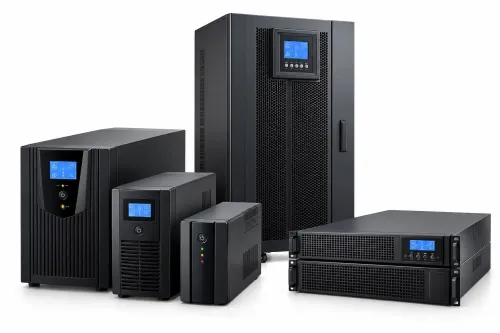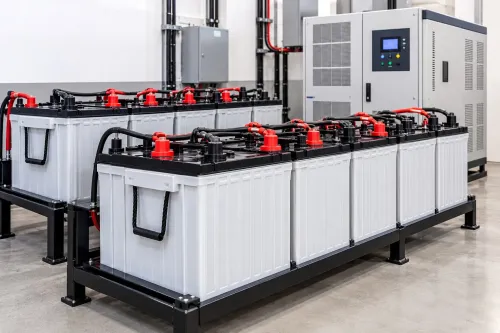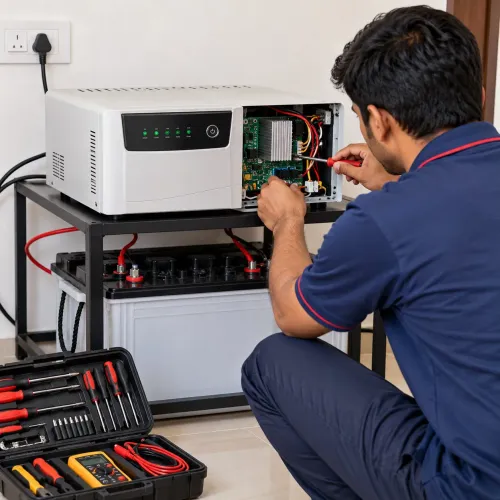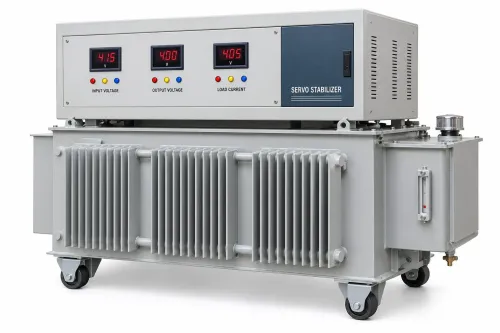
A double-conversion UPS does not wait for mains power to fail before creating its output: the rectifier builds a DC link and the inverter continuously supplies the connected load. By following that path, checking real-power demand and verifying the battery and installation design, you can judge whether a proposed system will protect your equipment through Nagpur’s utility, generator and temperature conditions.
Key takeaways
- The inverter continuously powers the load while utility power is available.
- Check both kVA and power factor before connecting equipment to a 5 KVA UPS.
- Battery voltage, ampere-hours and load size determine backup time.
- Verify earthing, bypass wiring, ventilation and input supply before installation.
What happens inside the UPS while utility power is available?
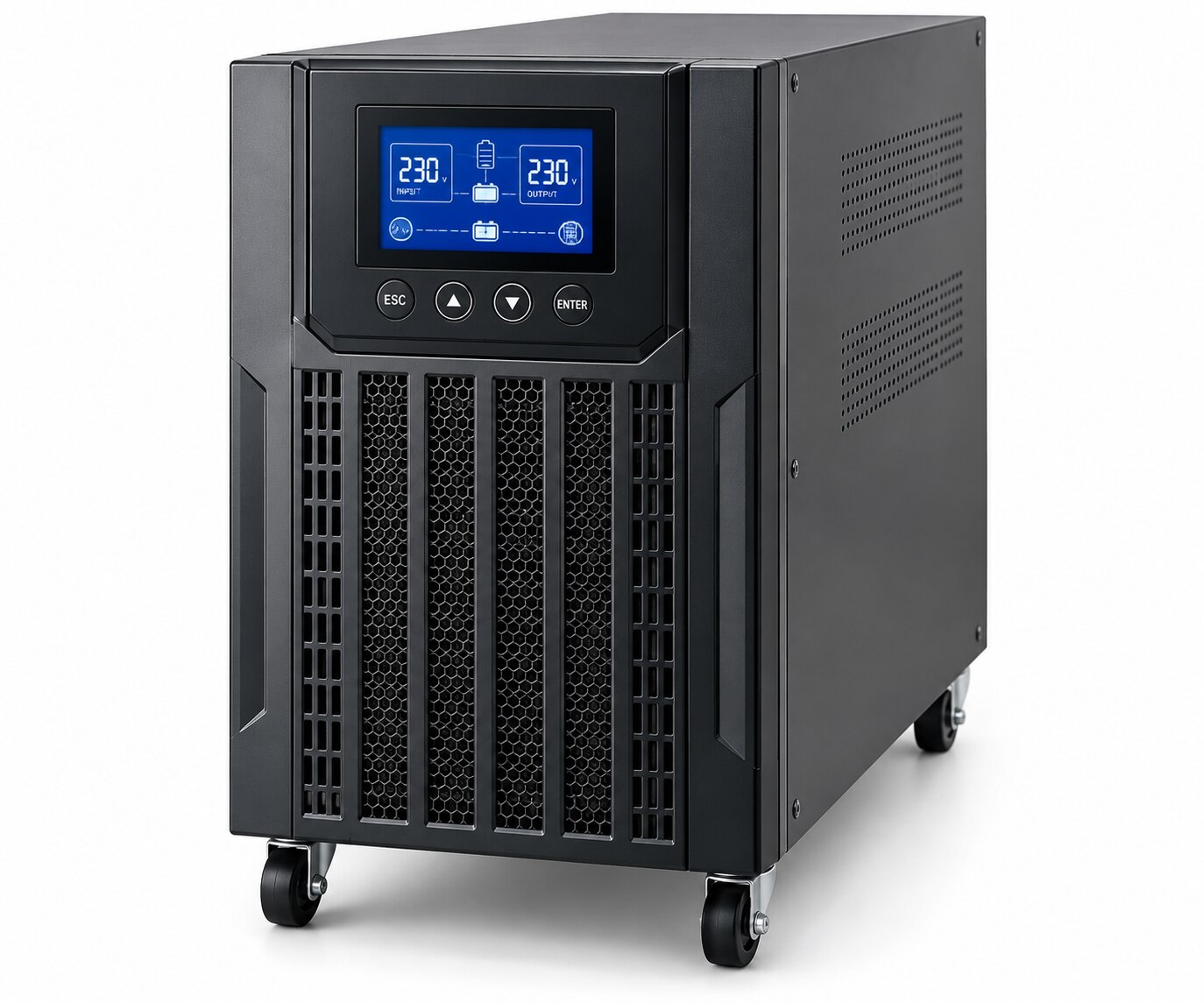
With utility power present, a 5 kVA online UPS continuously converts AC to DC and back to controlled AC, so the load is isolated from many input-voltage and frequency disturbances. That is how online UPS works: the inverter supplies the equipment continuously rather than waiting for a failure.
1. The rectifier converts incoming AC into regulated DC. It controls the DC level across the common DC bus, even when Nagpur utility voltage moves within the UPS input range.
2. The DC bus provides the shared energy link. A charger, or a charger with a DC/DC stage, draws from this bus to maintain the battery at its required charge voltage without directly feeding raw utility power to the load.
3. The inverter converts the regulated DC back into AC at the specified voltage and frequency. The equipment therefore receives a controlled waveform while the rectifier, charger and inverter manage the input and battery separately.
4. During healthy utility operation, the battery remains ready on the DC bus. If the input fails, the battery supports that bus and the inverter continues feeding the load; no relay transfer interval is needed.
A genuine double-conversion design is generally classified as VFI, or voltage and frequency independent, under IEC 62040-3. Confirm VFI in the model datasheet; the word online alone proves nothing.
Continuous conversion has a price: rectifier and inverter losses become heat, and cooling fans create noise even with healthy utility power. Size room ventilation or air-conditioning to the manufacturer’s heat-dissipation figure, not cabinet space alone.
How does a 5 KVA online UPS respond to voltage changes and a blackout?
A 5 kVA online UPS keeps its inverter connected to the load whether Nagpur utility power is stable, fluctuating, outside the input-voltage window or absent. That is the core of how online UPS works: the rectifier supplies the DC bus, while the inverter continuously creates the output AC.
During a blackout, the rectifier stops receiving usable input, but the battery maintains the DC bus and the inverter continues feeding the load.
The inverter-to-battery change therefore needs no relay transfer or waiting interval. “Zero transfer time” applies to this healthy online transition only. Runtime still depends on battery voltage, ampere-hour capacity, connected kW, efficiency, battery age and temperature—not the 5 kVA label alone.
| UPS design or path | What the load experiences | When it applies |
|---|---|---|
| Offline UPS | Mains normally feeds the load; a relay switches it to the inverter after the supply fails | During a utility outage; the switch can create a transfer interval |
| Line-interactive UPS | Mains normally feeds the load while regulation corrects a narrower range of voltage variation | While input remains within its operating arrangement; the inverter takes over outside that range |
| Static bypass | Current travels around the inverter | During overload, inverter fault or maintenance, only when bypass voltage, frequency and synchronisation are acceptable; transfer can briefly interrupt |
| Battery operation | The inverter remains the load’s source while the battery supports the DC bus | During a normal outage or unacceptable input condition |
A maintenance bypass also routes power around the UPS for servicing, so never treat bypass operation as battery backup. For a 5 kva online ups working in nagpur, ask the installer to state the inverter-to-battery transfer specification separately from every static or maintenance-bypass transfer.
How do you check whether a 5 KVA rating fits the connected load?
A 5 kVA online UPS fits only when both apparent power and real power remain within its nameplate limits. A 0.9 output power factor restricts a 5 kVA unit to 4.5 kW; a unity-power-factor model can deliver 5 kW, subject to its nameplate and overload curve.
| Rating | Usable real power |
|---|---|
| 5 kVA at 0.9 power factor | 4.5 kW |
| 5 kVA at 1.0 power factor | 5 kW |
Use this sizing method:
- List every connected device, its measured or specified watts, and its power factor.
- Add startup or inrush demand from motors, transformers, compressors and capacitor-input power supplies. A load that runs at 2 kW can briefly demand far more.
- Apply growth margin and operating headroom instead of loading the inverter to its limit. Record the manufacturer’s overload duration, such as the permitted seconds at 125% or 150% load.
- Identify nonlinear IT supplies and specify crest factor or peak-current requirements. Acceptable average kW can still drive inverter peak current, overload protection or thermal limits.
- For a three-phase output, calculate each phase separately and balance the loads. A safe total can conceal one overloaded phase.
For a 5 kva ups installation in Nagpur, provide the supplier with the load schedule, inrush values, crest-factor requirement, growth margin and phase distribution. Do not select it from the kVA label alone.
What determines backup time and battery-bank suitability?
Thirty minutes is not a universal result for a 5 kVA online UPS. It is a runtime measured at a stated connected load, battery arrangement and cutoff setting, so a lower load does not guarantee proportionally longer autonomy.
Request the manufacturer’s runtime table for the exact installation and confirm:
- Connected load in kW or percentage of UPS capacity
- Battery-bank DC voltage and Ah capacity
- Number of series cells and parallel strings
- Inverter efficiency at the stated load
- Battery age and condition
- Battery temperature
- Discharge-rate curve used for the runtime figure
- Configured end-of-discharge voltage
Do not calculate runtime by extrapolating one load result to another. The discharge-rate curve and inverter losses change the result, particularly at higher currents.
“90 batteries” is not a complete specification. It could mean a supported maximum, the quantity supplied, or a particular series-and-parallel arrangement. Battery quantity follows the UPS DC design, cell voltage and required bus voltage—not the 5 kVA label alone.
For a 5 kva online ups working in nagpur, control heat before selecting the battery location. VRLA batteries are commonly rated at 20 or 25 °C; sustained higher temperatures reduce service life. Follow the battery manufacturer’s ventilation and temperature-compensation provisions, rather than placing the cabinet in an unconditioned hot area.
What must be verified before a 5 KVA UPS installation in Nagpur?
Do not approve a 5 kVA UPS installation in Nagpur from the nameplate alone. Measure the feeder voltage, frequency, neutral-to-earth voltage, protective-earthing resistance and harmonic distortion under normal and generator supply. Confirm that the UPS input-voltage and frequency windows match those readings.
1. Provide a dedicated input protective device, dedicated output circuit, protective-earth conductor, correctly sized cables, and a battery isolator or breaker. Select the input breaker from the manufacturer’s current, inrush, input-range and protection data—not from 5 kVA alone.
2. Check generator compatibility against the rectifier’s current pulses, input power factor and harmonic current. A conventional rectifier can distort generator voltage or cause hunting; require an active-front-end or stated generator-mode specification when the model provides it.
3. Add a maintenance bypass when the load must remain powered during UPS servicing. Keep it separate from the static bypass, which depends on acceptable bypass voltage, frequency and synchronisation.
4. Before energising, verify polarity, phase and neutral, terminal torque, insulation resistance and protective-earth continuity. Check each battery’s open-circuit voltage and the complete string voltage.
5. Test inverter and bypass operation, simulate mains failure, confirm battery discharge alarms and verify recharge. Finish with the actual controlled load or a load bank; a no-load transfer proves little for nonlinear IT equipment.
For a 5 kVA online UPS working in Nagpur, Mahendra power Zone can survey these conditions, match the battery and bypass arrangement to the load, and commission or service the system against measured site results.
Related product
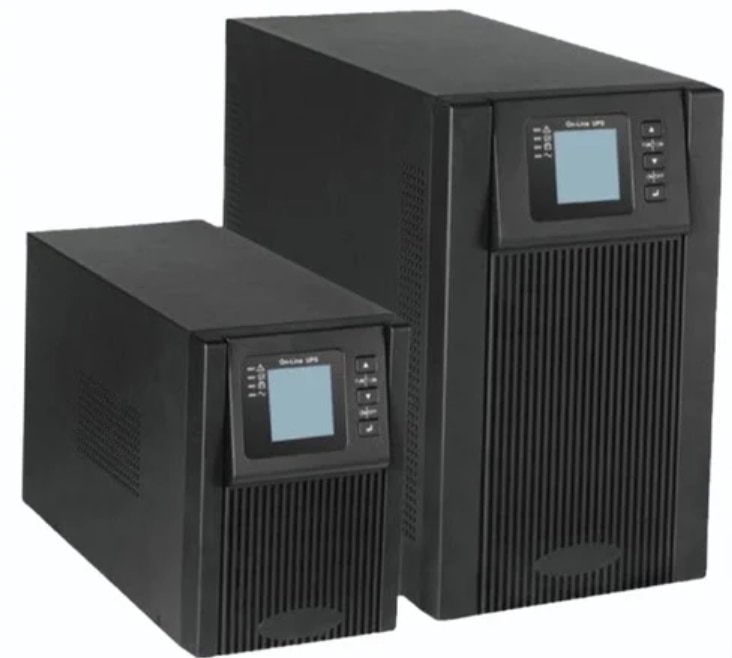 | Online Ups Capacity 5 KVA Configuration 3 Phase IN & 3 Phase OUT Model Name/Number 5 KVA ONLINE UPS Back Up Time 30 Mins Battery Backup 90 Number Of Batteries... View product → |
Frequently asked questions
What happens inside a 5 KVA online UPS while utility power is available?
The rectifier converts incoming AC to DC, the battery bus remains charged, and the inverter continuously converts DC back to regulated AC for the load.
How does a 5 KVA online UPS respond to voltage changes and a blackout?
The rectifier and inverter regulate the output during input voltage changes. During a blackout, the battery supplies DC to the inverter without an interruption to the connected load.
How do you check whether a 5 KVA rating fits the connected load?
Add the equipment’s real power in watts, check the UPS output power rating and power factor, then leave capacity for starting currents and future expansion.
What determines backup time and battery-bank suitability?
Backup time depends on load power, battery voltage, ampere-hours, battery condition, inverter efficiency and the selected runtime. Confirm the UPS battery voltage and charging limits before choosing batteries.
What must be verified before a 5 KVA UPS installation in Nagpur?
Verify the input supply, output wiring, earthing, cable and breaker sizes, bypass arrangement, battery location, ventilation, ambient temperature and space for maintenance.
Keywords