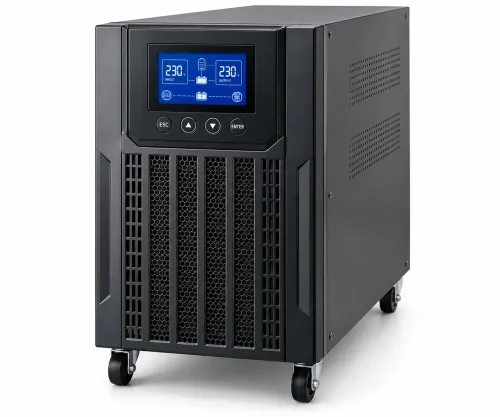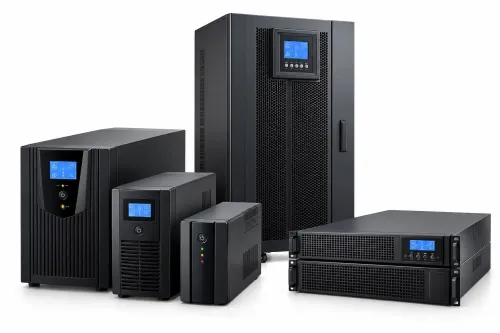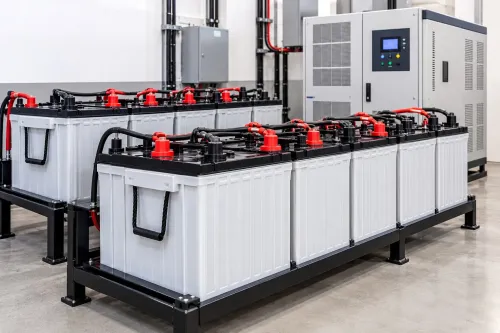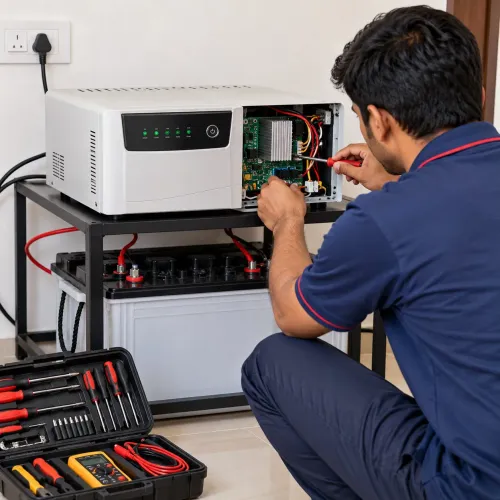
High humidity, condensation, water ingress and storm-related electrical disturbances can reduce industrial battery reliability even when the cells are relatively new. You will be able to identify the likely fault, set safer rainy-season room conditions and organise inspections that protect battery backup during monsoon.
Key takeaways
- Keep battery rooms dry, ventilated and free from condensation.
- Inspect terminals, interconnects, cases and floors after heavy rain.
- Separate battery failure from UPS, charger and incoming-supply faults.
- Test backup runtime before deciding to repair or replace batteries.
Why Nagpur’s monsoon creates battery risk
Rain itself does not directly reduce a lead-acid battery’s electrochemical capacity. Monsoon inverter battery problems in nagpur industries arise when humidity, condensation, wet dust, leaks or flooding reach the battery room, causing corrosion, surface leakage, self-discharge and unstable connections. Nagpur’s monsoon also overlaps with the hottest part of the battery’s annual operating cycle.
The common field rule says service life approximately halves for each 10 °C rise above the 25 °C reference, but the exact effect depends on battery design and duty.
| Condition | Mechanism | Result |
|---|---|---|
| Dry, temperature-controlled room | Rain remains outside the enclosure | Normal battery performance |
| Damp room with conductive dust-and-moisture film | Film bridges battery tops, terminals or racks | Surface leakage, self-discharge and nuisance earth-fault alarms |
| Leak, condensation or floodwater | Water reaches cases, cables, racks or connectors | Corrosion, insulation failure, short circuits and industrial battery problems in nagpur |
| Storm-related mains disturbance | Transients or outages stress rectifiers, chargers, static switches and monitoring electronics | Charger failure or loss of backup despite a healthy-looking battery |
A damp battery room can therefore damage a relatively new battery, while a sealed, clean room can protect one through the season. Do not treat monsoon as one temperature condition: log room temperature and humidity.
Wet contamination can also create local heating at connections, and unstable mains can leave the charger or DC protection failed without obvious battery damage.
How humidity affects flooded, tubular, SMF and VRLA batteries
Flooded and tubular cells need the closest wet-season attention because exposed terminals, posts and connectors corrode quickly in humid, contaminated air. Check electrolyte level after charging; top up only with the manufacturer’s specified distilled or deionized water. Never use tap water: its minerals increase self-discharge and contaminate plates.
| Battery type | Monsoon response | Maintenance concern |
|---|---|---|
| Flooded lead-acid | Vented construction releases gas and exposes electrolyte | Corrosion, electrolyte loss and hydrogen require inspection and ventilation |
| Tubular | Tolerates deep cycling, but remains vulnerable to damp terminals and electrolyte loss | Check levels after charging; use only specified distilled or deionized water |
| SMF | Normally sealed and less exposed to spills | Do not open or top up; breaching the design creates safety and warranty risks |
| AGM | VRLA construction limits routine water loss | Do not open; overcharge, heat and blocked ventilation can still cause venting |
| GEL/VRLA | Sealed design reduces handling but does not eliminate humidity or gas risk | Do not add water; control charging, temperature and ventilation |
For an inverter battery in monsoon conditions, keep the room as close as possible to 25 °C and record temperature instead of treating monsoon as one condition. Control humidity, keep surfaces dry, preserve the manufacturer-specified rack and wall clearances, and keep ventilation openings unobstructed.
- Keep hydrogen ignition sources away from the bank; vented cells and failing VRLA units can release gas.
- Do not direct rain-laden air onto batteries when positioning exhaust fans or fresh-air openings.
- Include these controls in your inverter battery maintenance rainy season plan; wet tops, condensation and poor airflow turn minor corrosion into leakage or fire risk.
What to inspect after heavy rain or flooding
Do not re-energize a wet battery bank. Isolate the UPS according to its safety procedure, restrict access and have a qualified person inspect it; flooded equipment can contain live DC and stored energy.
1. Inspect the room before touching the batteries. Check roof and wall leaks, floor drains, door thresholds, cable trenches, cable glands, ventilation openings, battery-room plinth height, and air-conditioning or chilled-water drain lines. Confirm the rack and batteries sit above the plausible flood level.
2. Examine every battery case, terminal and inter-cell connector. Look for cracked cases, bulging, electrolyte leakage, blocked vents, post corrosion, wet battery tops, white or green deposits and black marks or pitting that indicate arcing. Inspect rack corrosion, cable insulation, lugs, fuses, charger terminals, charger alarms and UPS enclosures for water entry.
3. Remove power before cleaning. Wipe contaminated surfaces with a dry cloth; do not spray water or solvent onto batteries, terminals, racks or electronics. Apply terminal protection only in the type and location specified by the battery manufacturer.
4. Have the manufacturer’s torque values used for every inter-cell link. Generic torque can damage posts, while a loose connection creates heat under load. Include this check in inverter battery maintenance rainy season records, then perform infrared inspection under a representative UPS load to find hidden high-resistance joints.
Replace damaged links, cables, fuses or batteries under the manufacturer’s procedure. A dry room, clear vents and corrected leaks are part of the repair, not optional housekeeping.
How to tell a failed battery from a UPS or supply fault
A UPS can show normal float voltage and no charger alarm while its battery backup during monsoon has collapsed. A failed cell, sulfation, dry-out, loose inter-cell link or high-resistance terminal can remain hidden until an outage.
1. Confirm the utility supply first. Record input voltage, phase balance, frequency and UPS event logs; poor mains or repeated transfers can mimic battery weakness. Check whether the inverter carries the load correctly on bypass and battery mode.
2. Inspect the DC path with the UPS isolated under an approved procedure. Check battery fuses, isolators, inter-cell links, terminal torque, corrosion and cable heating. A loose joint can look normal at float current yet create a severe voltage drop and hot spot during discharge; use infrared inspection under representative load.
3. Separate charger or rectifier faults from battery faults. Compare charger float voltage, float current and ripple with manufacturer limits, then check inverter alarms and DC-bus voltage. A blown fuse, failed rectifier or inverter fault can stop charging or transfer, while a healthy charger cannot restore a damaged cell.
4. Treat reduced runtime, slower recharge, nuisance alarms and unequal cell performance as evidence requiring a test, not proof by themselves. Conductance or impedance readings help trend deterioration, but acceptance requires a controlled discharge at the specified current and end-cell voltage.
5. Calculate the test against actual motor starts, compressor cycling, harmonic-rich rectifiers and load growth. Apply temperature correction and aging margin; nominal ampere-hours alone misstates autonomy. That distinction matters in industrial battery problems in nagpur.
A rainy-season maintenance and service decision checklist
Set three inspection points for battery backup during monsoon: before the rains, after every major leak or flood event, and during prolonged wet weather. This schedule catches monsoon inverter battery problems in Nagpur industries before a storm exposes a weak string.
| Timing | Inspect | Record or decision |
|---|---|---|
| Pre-monsoon | Cells or blocks, racks, cables, charger, room and water-entry points | Each cell/block voltage, temperature and specific gravity where applicable; string float voltage/current, charger ripple, room temperature/humidity, photographs of corrosion or leakage, and comparison with prior readings |
| After leak or flood | Water exposure, wet tops, corrosion, insulation, UPS and battery enclosures | Isolate unsafe equipment; confirm batteries remain above plausible flood level before re-energising |
| Prolonged wet weather | Room conditions, battery temperature, float values and UPS alarms | Review trends and UPS event logs; investigate rising humidity, ripple, unequal voltage or repeated alarms |
Include earthing and bonding, surge-protection condition, upstream breakers and fuses, neutral integrity, cable glands, drains and thresholds in every seasonal review. Check ventilation openings and keep batteries away from chilled-water pipes and air-conditioning drain lines.
Do not replace one visibly damaged block automatically: its age and impedance can mismatch the remaining string. Follow the manufacturer’s replacement procedure and verify the string afterward.
Without trained electrical staff or suitable test equipment, stop at visual checks and call a qualified industrial UPS and battery service provider such as Mahendra power Zone for controlled testing, fault isolation and post-replacement verification.
Related products
 | Inverter Battery Brand Exide Product Type Inverter Battery Color Red Use Electricity Backup Load Crest Factor 31 Country of Origin Made in India We MAHENDRA POWER... View product → |
 | Ups Battery Type Online Brand Eaton Usage/Application Industrial Protection OverVoltage Warranty 1 Year We MAHENDRA POWER POWER , leading supllier of UPS... View product → |
Frequently asked questions
Why does Nagpur’s monsoon create industrial inverter battery problems?
Humidity, condensation, wet dust, leaks and flooding can cause corrosion, surface leakage, self-discharge and unstable connections. Monsoon also follows Nagpur’s hottest operating period, which accelerates lead-acid battery ageing.
How does humidity affect flooded, tubular, SMF and VRLA batteries?
Moisture promotes terminal and interconnect corrosion across all types. Flooded and tubular batteries also need electrolyte-level checks, while sealed maintenance-free and VRLA batteries require inspection for case swelling, venting, leakage and poor connections.
What should you inspect after heavy rain or flooding?
Isolate unsafe equipment, then check for standing water, damp floors, leaks, condensation, wet dust, corrosion, cracked cases, swollen batteries and loose terminals. Do not energise flooded equipment until a qualified technician has inspected it.
How can you tell a failed battery from a UPS or supply fault?
Check incoming voltage, charger output, DC bus voltage, battery-string voltage and individual block voltages. A controlled discharge or runtime test helps confirm battery weakness after UPS and charging faults are excluded.
When should you repair, replace or service an industrial inverter battery?
Service the system when corrosion, loose connections, charging faults or environmental moisture caused the problem. Replace batteries with failed blocks, severe swelling, leakage, repeated low runtime or unsafe damage; use a qualified service provider for flooded equipment and high-voltage strings.
Keywords